
Is There a Connection Between Sleep Apnea and Heart Health?
Most people think of sleep apnea as just a snoring problem. You might assume it’s an annoyance for your partner, but harmless to your own health. Unfortunately, the reality is far more serious. Your sleep quality and your heart health are deeply intertwined, and ignoring the signs of sleep apnea could put your cardiovascular system at risk.
At Sleep Apnea & TMJ Solutions in Brentwood and Murfreesboro, TN, Dr. Bryan McLaughlin sees firsthand how untreated sleep disorders affect the whole body. As a member of the American Academy of Dental Sleep Medicine with extensive experience in sleep disorders, Dr. McLaughlin helps patients understand that treating sleep apnea isn’t just about getting a better night’s rest—it’s about protecting your heart.
The Dangerous Link: How Apnea Hurts Your Heart
Obstructive Sleep Apnea (OSA) occurs when the muscles in your throat relax too much during sleep, blocking your airway. This causes you to stop breathing repeatedly throughout the night.
When your breathing stops, the oxygen levels in your blood drop. Your brain senses this emergency and panics, sending a surge of stress hormones like adrenaline into your system to wake you up enough to breathe again. This cycle can happen dozens or even hundreds of times a night.
This constant “fight or flight” response takes a heavy toll on your cardiovascular system.
High Blood Pressure (Hypertension)
This is the most common link. Because your body is constantly stressed and oxygen-deprived at night, your blood pressure spikes. Over time, this nighttime hypertension can carry over into the day. If you have high blood pressure that won’t respond to medication, sleep apnea is often the hidden culprit.
Heart Disease and Failure
The repeated drops in oxygen strain the heart muscle. Over years, this can increase the risk of coronary artery disease and even heart failure, where the heart struggles to pump blood effectively.
Stroke
The connection here is frighteningly clear. The intense strain on blood vessels and fluctuating oxygen levels increase the likelihood of clots forming, which can lead to a stroke.
Irregular Heartbeats (Arrhythmias)
People with severe sleep apnea are much more likely to develop atrial fibrillation (A-fib). This irregular heartbeat can cause blood clots and significantly raise the risk of stroke.
Signs You Might Have Sleep Apnea
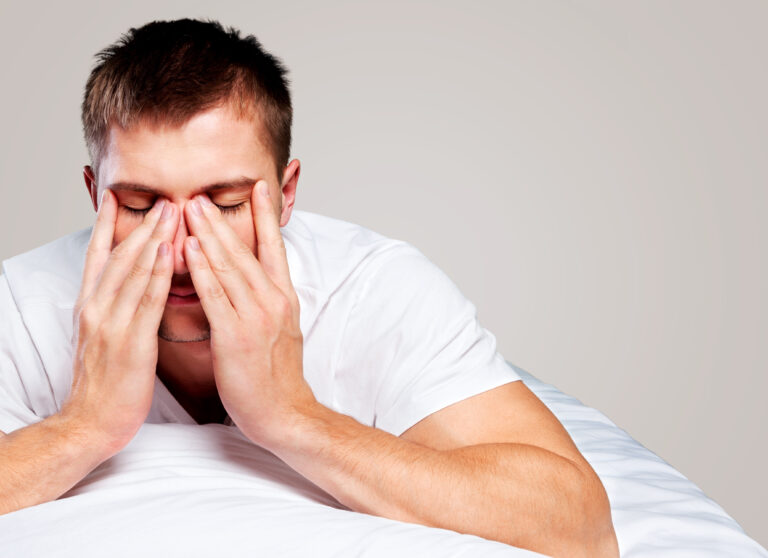
Many patients suffer for years without realizing they have a disorder. They attribute their fatigue to aging or stress. However, if you notice these symptoms, your heart might be in danger:
- Loud, chronic snoring: Especially if it is punctuated by gasping or choking sounds.
- Daytime fatigue: Feeling exhausted even after a “full” night of sleep.
- Morning headaches: Waking up with a dull ache that fades as the day goes on.
- Waking up with a dry mouth or sore throat.
- Mood changes: Irritability, depression, or difficulty concentrating.
Don’t Ignore the Warning Signs
If you have been diagnosed with heart issues, it is vital to screen for sleep apnea. Conversely, if you suspect you have sleep apnea, treating it can dramatically improve your heart health.
Dr. Bryan McLaughlin and the team at Sleep Apnea & TMJ Solutions provide effective, non-invasive alternatives to CPAP machines, such as custom oral appliances. These devices keep your airway open comfortably, protecting your oxygen levels and your heart.
Don’t gamble with your heart health. If you are in the Brentwood or Murfreesboro, TN area, schedule a consultation to see if a custom sleep solution can help you breathe easier and live longer.
Contact Sleep Apnea & TMJ Solutions:
615-850-8445
Location (Tap To Open In Google Maps):
1177 Old Hickory Blvd, Suite 203
Brentwood, TN 370271605 Medical Center Pkwy, Suite 215
Murfreesboro, TN 37129